Epic 4 Days Road Trip Alsace Itinerary (With Insider Tips)
Are you looking for an amazing road trip itinerary for Alsace? Then you are in the right place!
Alsace is a cultural region in Eastern France. It is famous for its medieval town squares and the Alsatian wine route.
There is a lot of information out there on which spots to visit in Alsace. To be honest, most of these itineraries are cramped, and there is no time to appreciate all the places.
If you are not looking forward to visiting 5 villages per day, you are in the right spot.
For that reason, I have created a relaxed road trip itinerary for the Alsace region – and of course, collected many great travel tips for this ultimate travel guide to Alsace.
Let’s get to it!

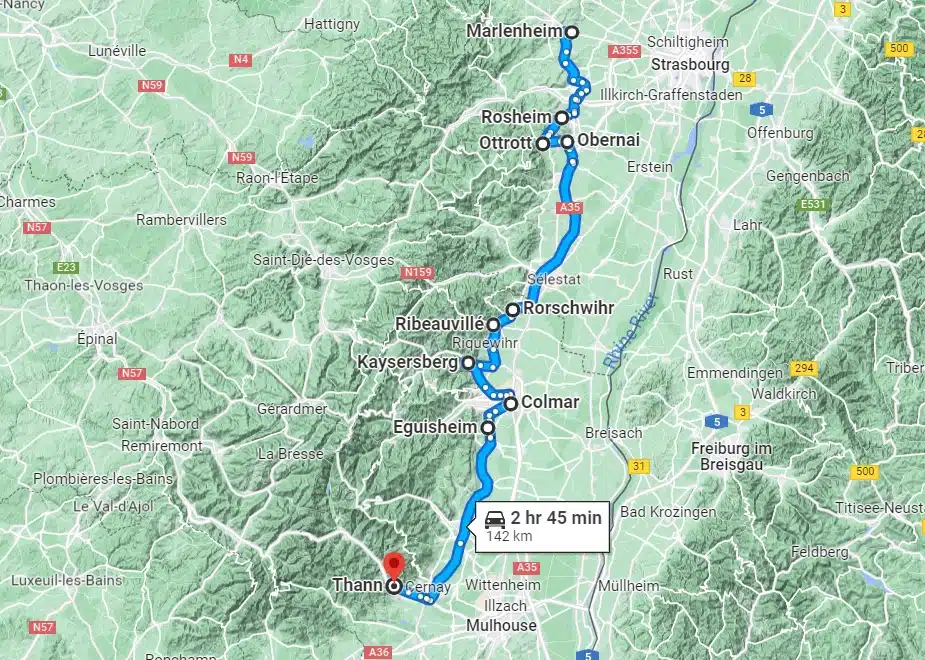
Alsace Road Trip Itinerary – at a Glance
- Day 1: Strasbourg
- Day 2: Ribeauvillé
- Day 3: Colmar, Riquewihr
- Day 4: Kaysersberg, Obernai


How to Get Around Alsace
To get around Alsace, you will need a (rental) car. The Alsace wine route is best seen by car.
Many villages in Alsace are quite far away from each other and hard to reach with public transport.
The biggest airport in the area is in Strasbourg. I recommend picking up a rental car in Strasbourg.
We usually book our rental cars with DiscoverCars, because they are reliable and cheap. They also have a great cancellation policy, which I appreciate.
Driving in Alsace is super easy, the roads are in great condition, and everything can easily be found.
The Alsace wine route is one of the most scenic drives in France.

About the Alsace Wine Route
The Alsace Wine Route is also known as “Route des Vins d’Alsace.”
It is a picturesque and renowned wine route in the Alsace region of France. It is one of the oldest and most famous wine routes in the world.
Wine enthusiasts, tourists, and nature lovers from all over the world stop at the Alsace wine route.
The route is approximately 170 kilometers (about 105 miles) long. It leads through the beautiful Alsace countryside, connecting numerous charming villages and towns along the way.
The route is lined with around 70 adorable, wine-producing villages. Every village has its own unique character and architecture.
My favorite villages along the Alsace Wine Route are Riquewihr, Ribeauvillé, Obernai, and Kaysersberg.
Day 1: Strasbourg
Strasbourg is a historic city located in northeastern France. It is the capital of the Alsace region.
Since you will most likely be landing in Strasbourg, I have included it in this Alsace road trip.
Strasbourg is one of the most significant cities in the European Union because it houses several key EU institutions.
Strasbourg has a rich and interesting history. It dates back over 2,000 years. The city has been influenced by both French and German cultures. You can still see it in the architecture, traditions, and cuisine.
Before heading down the Alsace wine route, there are quite a few things in Strasbourg that you can check out.
The Cathedral of Strasbourg and Little France (Petite France) are, of course, big highlights.
Also, make sure to check out the Palais Rohan and the Barrage Vauban!

Strasbourg Cathedral (Cathédrale Notre-Dame de Strasbourg)
The first thing you should check out in Strasbourg is the Strasbourg Cathedral. The awe-inspiring Gothic church is one of the most important religious monuments in Europe.
It has a striking façade, a beautiful rose window, and an impressive spire. If you go inside you can see stained glass windows and the astronomical clock.
Parts of Strasbourg are protected as a UNESCO World Heritage Site.

La Petite France
This charming neighborhood Le Petite France is definitely worth a visit.
Le Petite France is a picturesque area with cobblestone streets, half-timbered houses, and canals.
It is a typical Alsatian neighborhood that makes for great pictures.
The neighborhood offers a romantic atmosphere and a glimpse into the city’s medieval past.


Day 2: Ribeauvillé
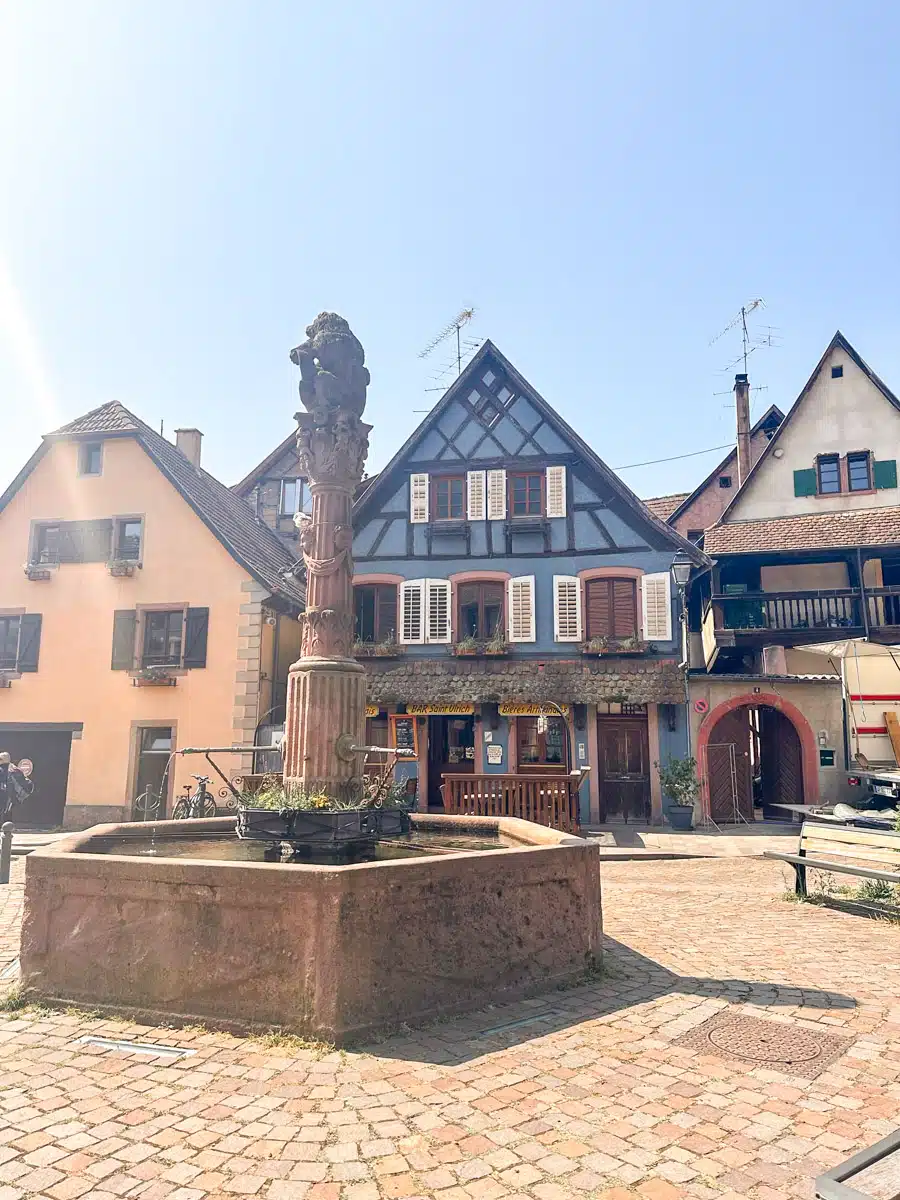
Ribeauvillé is a charming medieval town in the Alsace region. It is also my favorite village in Alsace, for many reasons.
Ribeauvillé is nestled close to the vine-covered hills of the Vosges Mountains. It is famous for its well-preserved historic architecture and wine-producing heritage.
The town’s medieval heritage is especially evident in the three medieval castles that overlook Ribeauvillé: Ginsberg, Saint-Ulrich, and Haut-Ribeaupierre.

Things to Do in Ribeauvillé
Explore the Town Center of Ribeauvillé
Ribeauvillé is a small town that makes you feel like you stepped back in history. The village has a well-preserved medieval center that you can easily explore on foot.
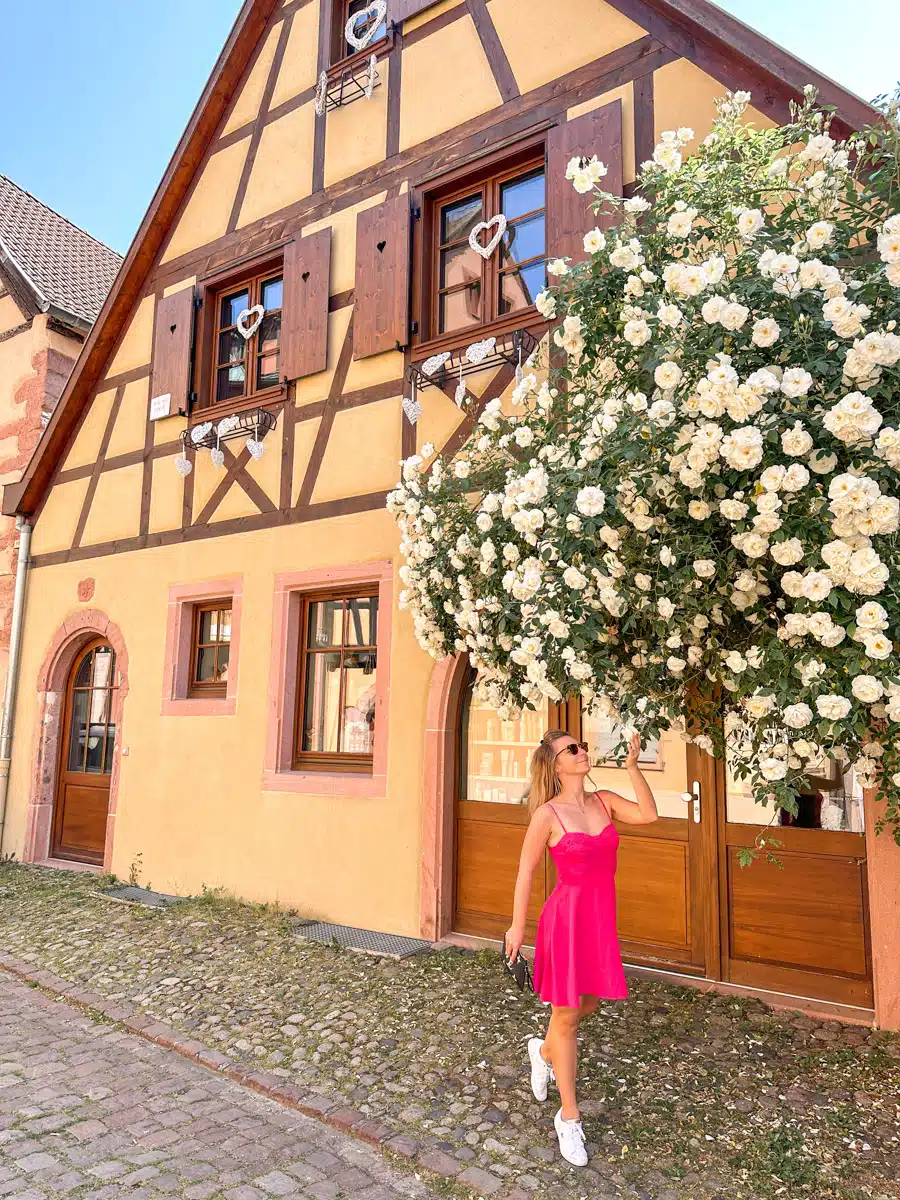
You can wander through the narrow cobblestone streets and see charming half-timbered houses that are decorated with colorful flowers. It almost has a fairy-tale-like atmosphere.
There are many cute little shops in town offering local arts and crafts that you should check out.
Make sure to sit down for a glass of delicious wine in one of the many bars and restaurants that line the street.
Tip: visit La Grand Rue and the Eglise Saint Gregoire.


Visit the Three Castles
A cool thing to do in Ribeauvillé is hiking up to the three castles. The three medieval castles overlooking Ribeauvillé are called Ginsberg, Saint-Ulrich, and Haut-Ribeaupierre.
Sadly, there are only ruins left. But the ruins offer panoramic views of the town and the surrounding vineyards. It is an amazing spot for photography.
It takes about an hour to hike up to the castles from the village. The hike is not too intense, but make sure to bring good shoes and lots of water (we forgot!).
If you love castles, you can also take a short drive to the Château du Haut–Koenigsbourg.

Wine Tasting
A road trip to the Alsace Wine Route would not be complete without a wine tasting.
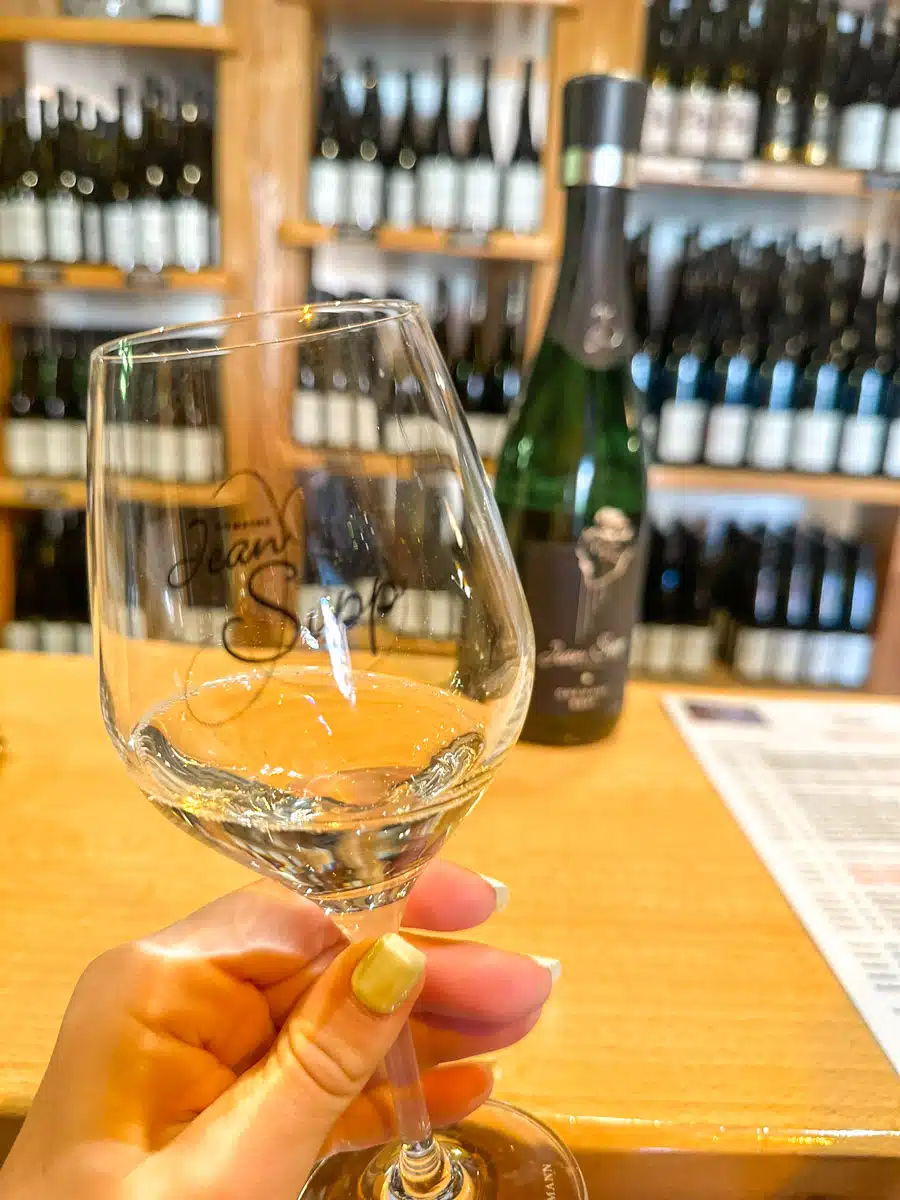
You can discover the famous Alsatian wines by visiting the local wineries and cellars in and around Ribeauvillé. There are so many little wineries in the village that it is not hard to find a spot for a tasting.
Don’t forget to try the dry Rieslings, aromatic Gewürztraminers, and the Pinot Gris, my favorite.
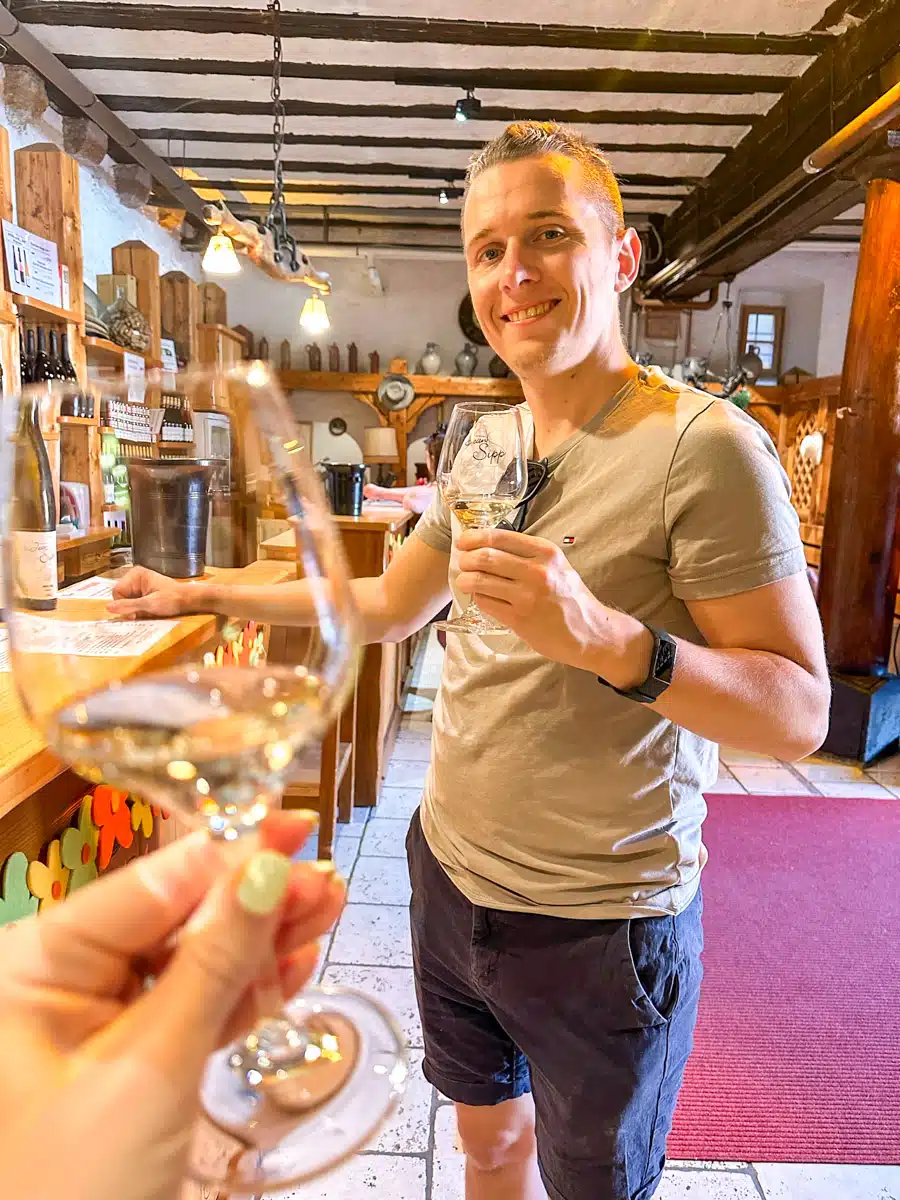
A great place for wine tasting in Ribeauvillé is Domaine Jean Sipp.
We tasted 8 different wines, and since we purchased a couple of bottles, the tasting was for free.

Where to Eat in Ribeauvillé
Ribeauvillé has an amazing choice of restaurants. They serve traditional Alsatian cuisine at fabulous prices.
All of the restaurants are unpretentious and have a super sweet atmosphere.
Here are some of my favorite restaurants in Ribeauvillé:
- D’baecka Ofa Stub
- Winstub La Flammerie
- Restaurant Caveau de l’ami Fritz
- Au Cosy Bar (charcuterie boards)
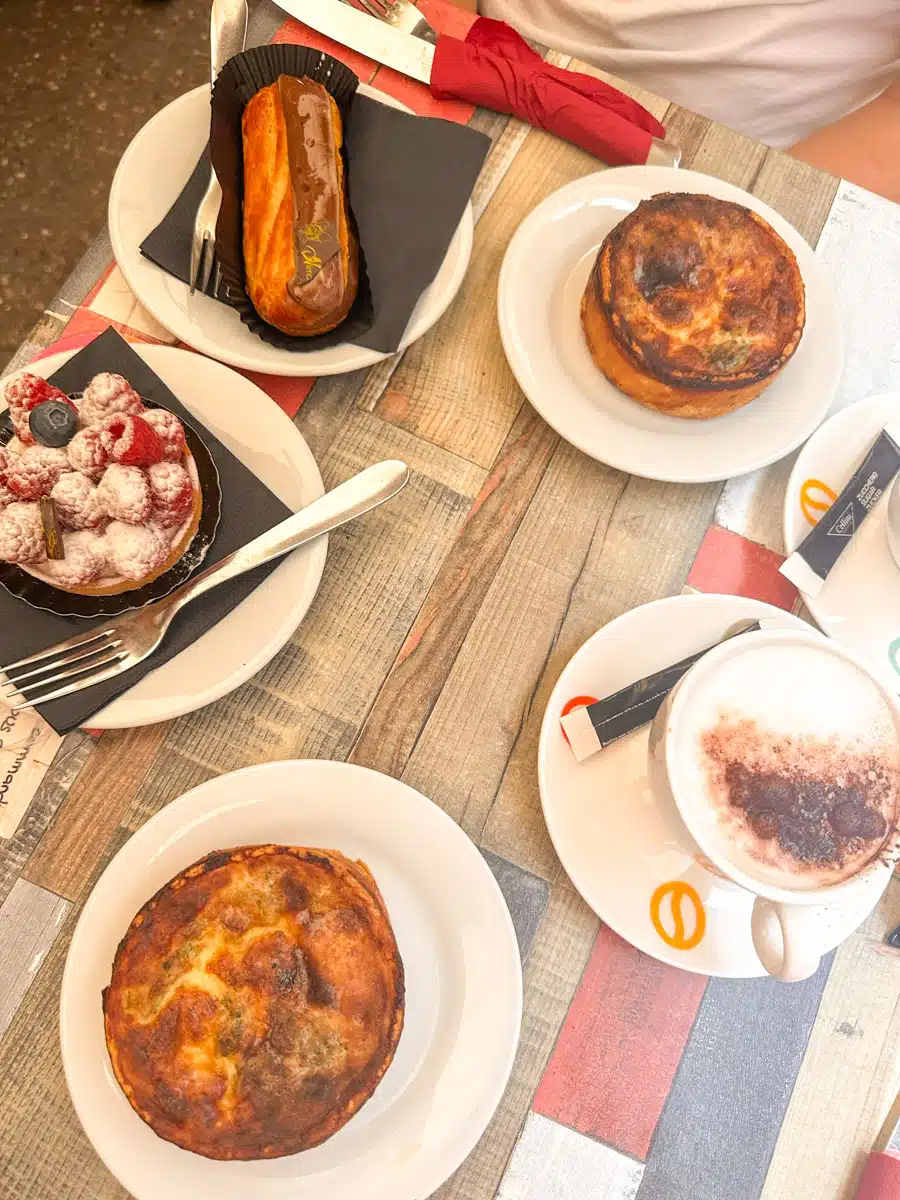
- Boulangerie Pâtisserie Vilmain (lunch and pastries)


Day 3: Colmar & Riquewihr
Colmar
Colmar is a stunning town in Alsace. Colmar is known as the “Little Venice” of France, and has in recent years become Insta-famous.
Colmar is renowned for charming canals, medieval architecture, and colorful flower-lined streets.
I recommend going early in the morning because it gets super crowded during the day. You can pretty much explore Colmar by yourself since it is not too big.
Historic Old Town
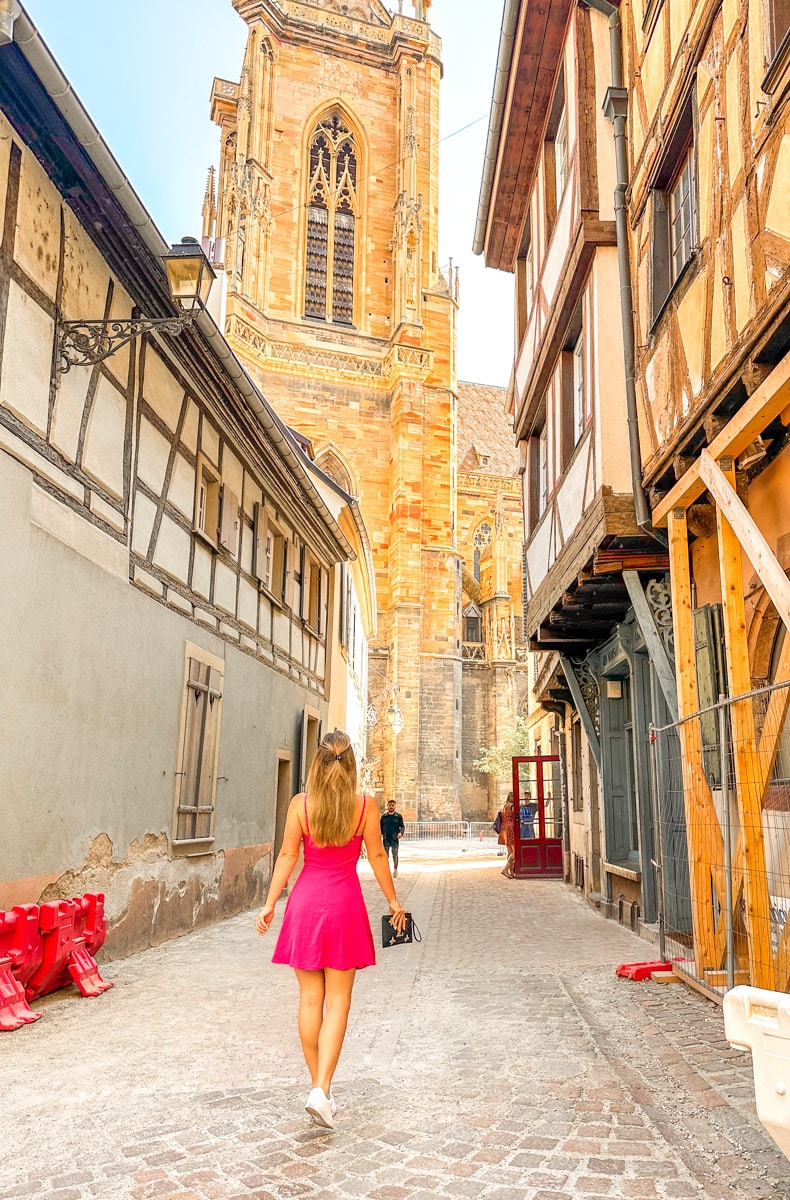
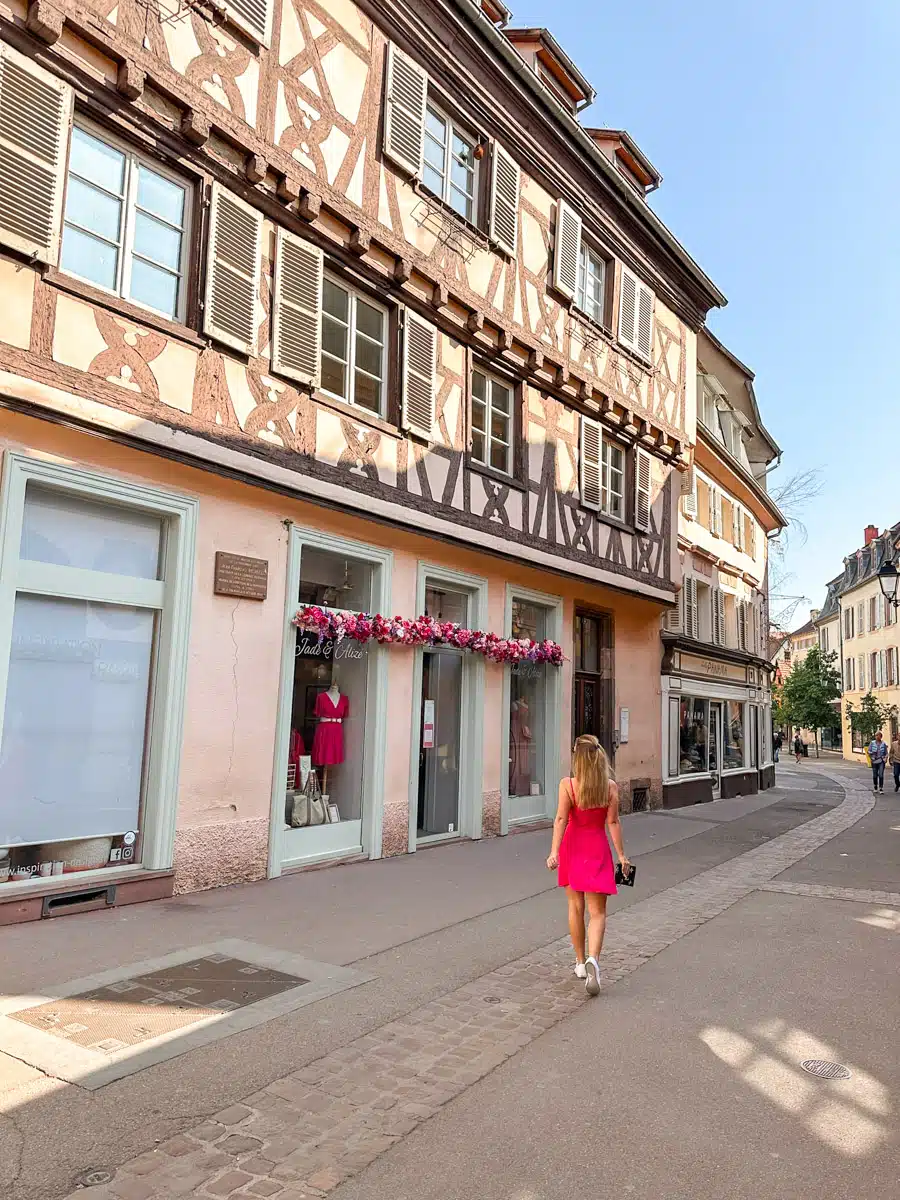
Colmar’s historic center is full of preserved buildings, some dating back to the Middle Ages.
Half-timbered houses, colorful facades, and narrow cobblestone streets make it a great place to wander and immerse yourself in history.
Make sure to walk by the St. Martin’s Church, the Ancienne Douane, and the Marché Couvert Colmar. The Unterlinden Museum is a must-visit attraction in Colmar.

Little Venice
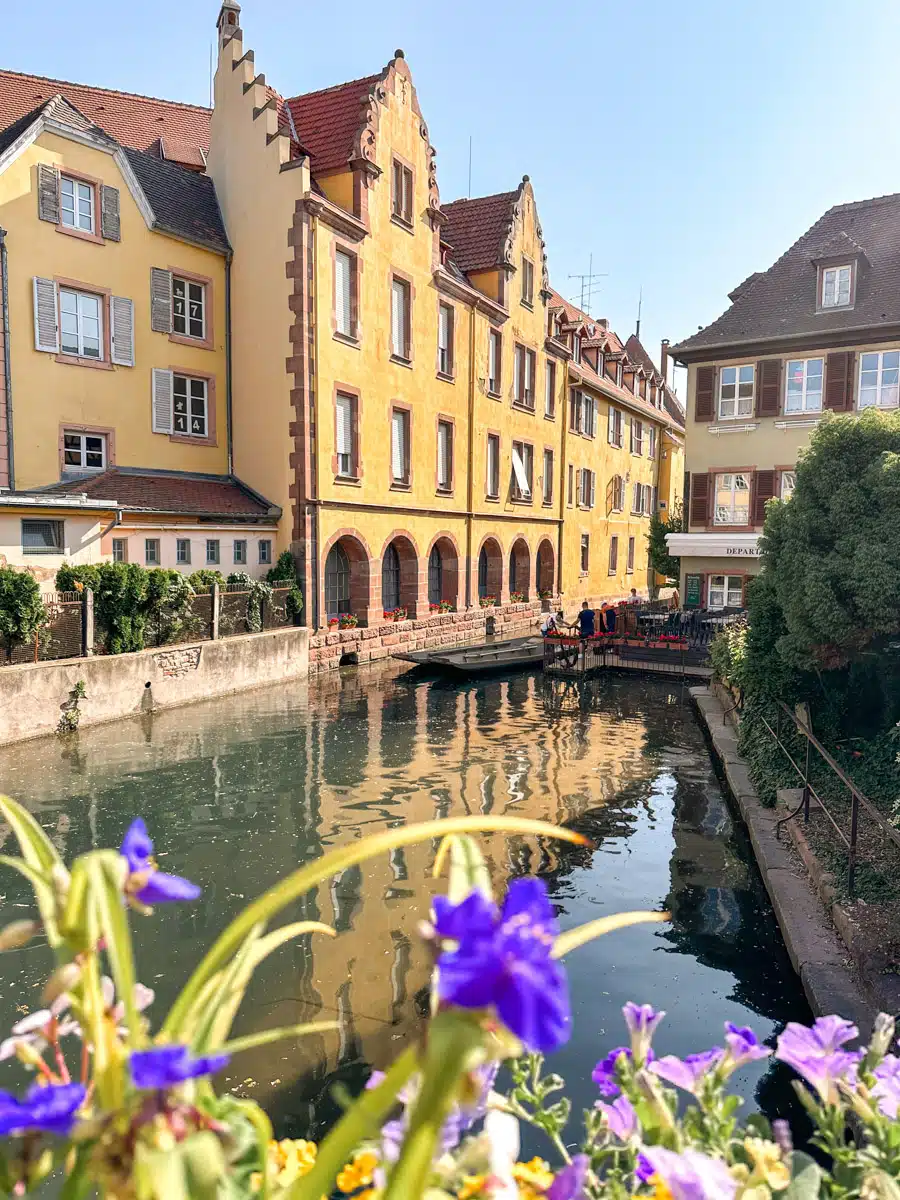
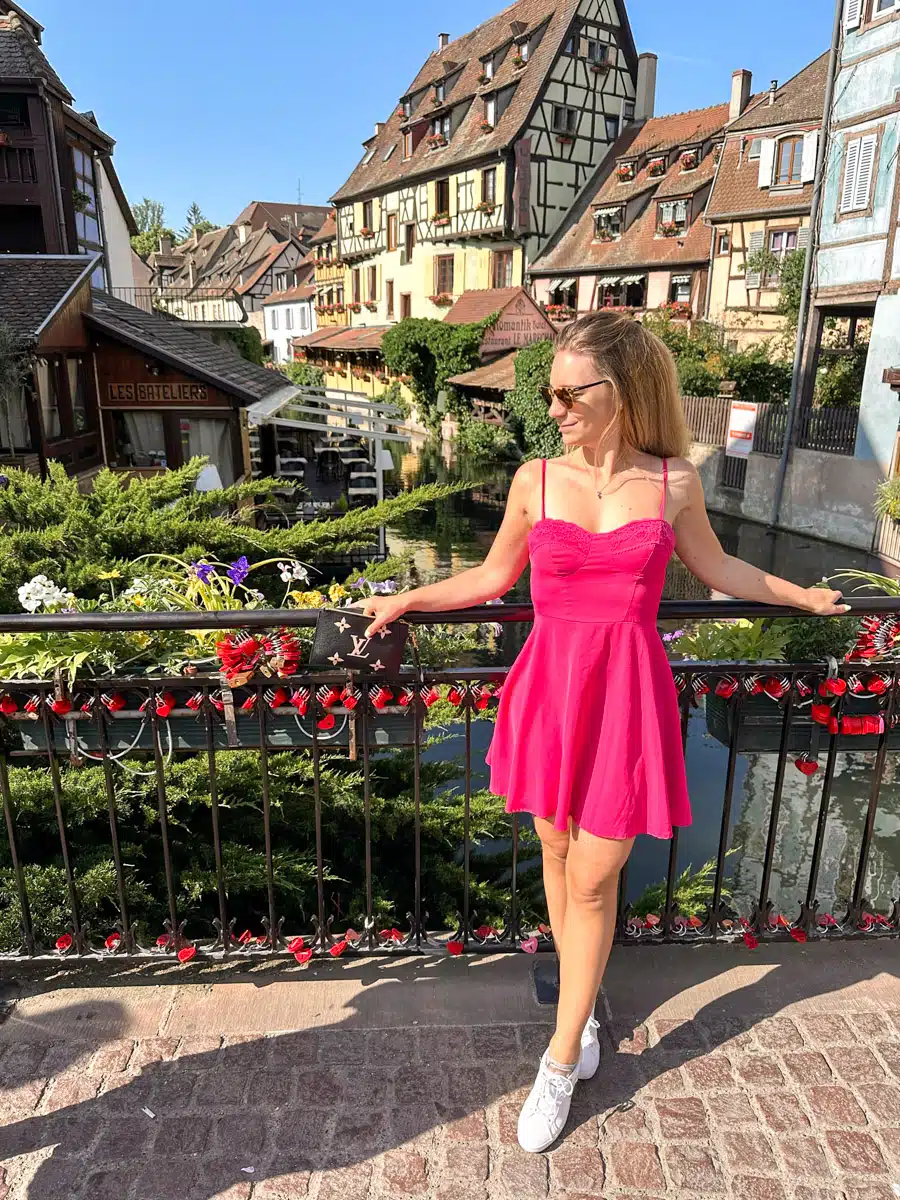
One of the highlights of Colmar is its “Little Venice” district. As the name already suggests, it is named for its picturesque canals lined with charming houses.
You can take boat tours along the canals and explore the town on the water. It is also a great place for a scenic walk or a delicious lunch.
Sadly, later in the day, this part gets really crowded. Make sure to be there early for a great experience.
Shopping
Colmar is probably the best place in Alsace if you want to do some shopping.
Lots of cute little shops have decorated storefronts and cute stuff to bring home.
Rue Des Clefs is the biggest shopping street in Colmar, make sure to hop by.

Riquewihr
Riquewihr is a stunning medieval village that needs to be on everyone’s Alsace itinerary. Riquewihr is known as one of the most beautiful villages in France.
Riquewihr is located in the heart of the Alsace Wine Route. It is surrounded by vineyards and rolling hills.
The village’s history dates back to the 8th century, and wandering through its narrow alleys is like stepping back in time.
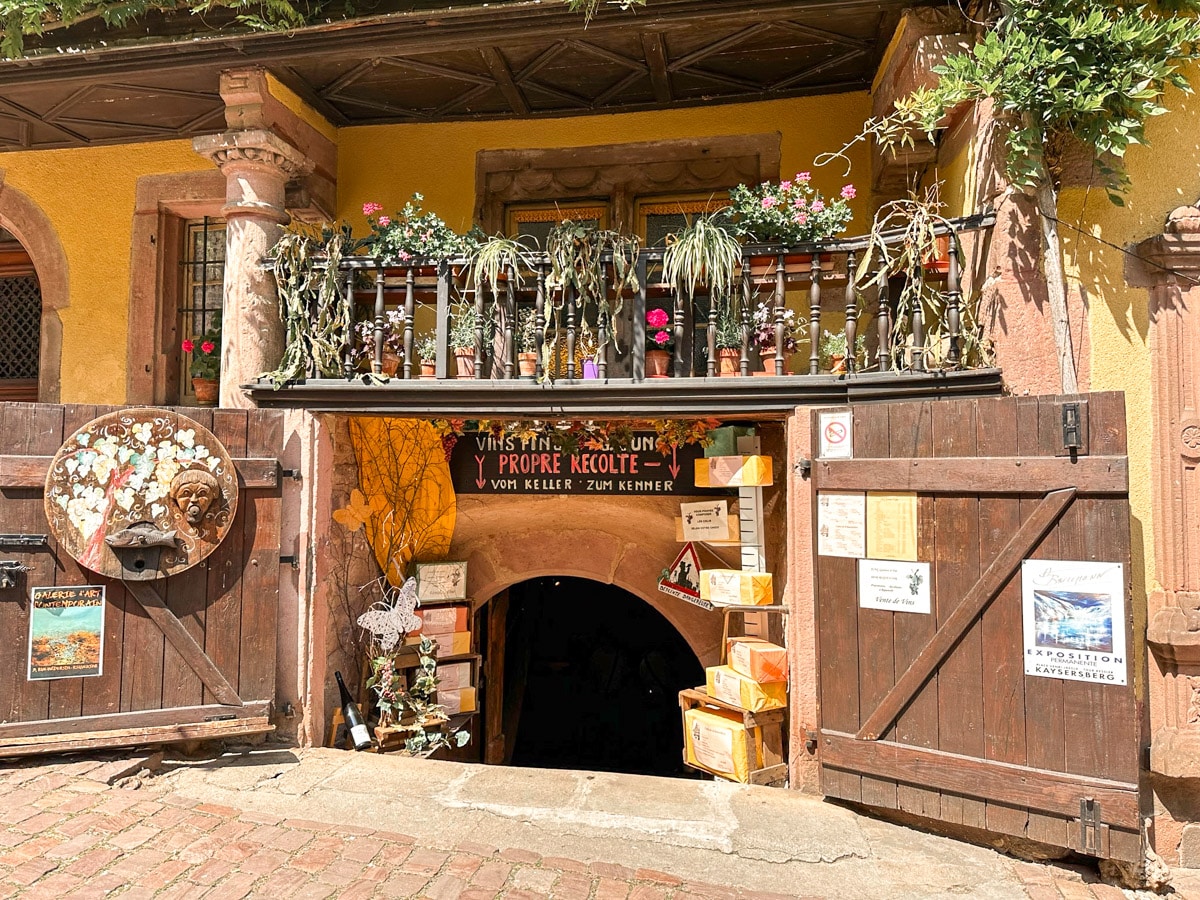
Riquewihr is, just like most Alsatian towns, characterized by its half-timbered houses, colorful facades, and flower-filled balconies. It has a fairy-tale atmosphere.
The town has several landmarks you should check out, such as the Dolder Tower. It is a medieval watchtower that offers great views of the village and surrounding vineyards.
Riquewihr is a great place to wine-taste. The winery Dopff au Moulin is one of the most important in the village, and they welcome visitors for tastings every day.
When we visited Riquewihr, it was sadly super crowded, so it was not my favorite village on the Alsace itinerary.


Day 4: Kaysersberg & Obernai
Kaysersberg
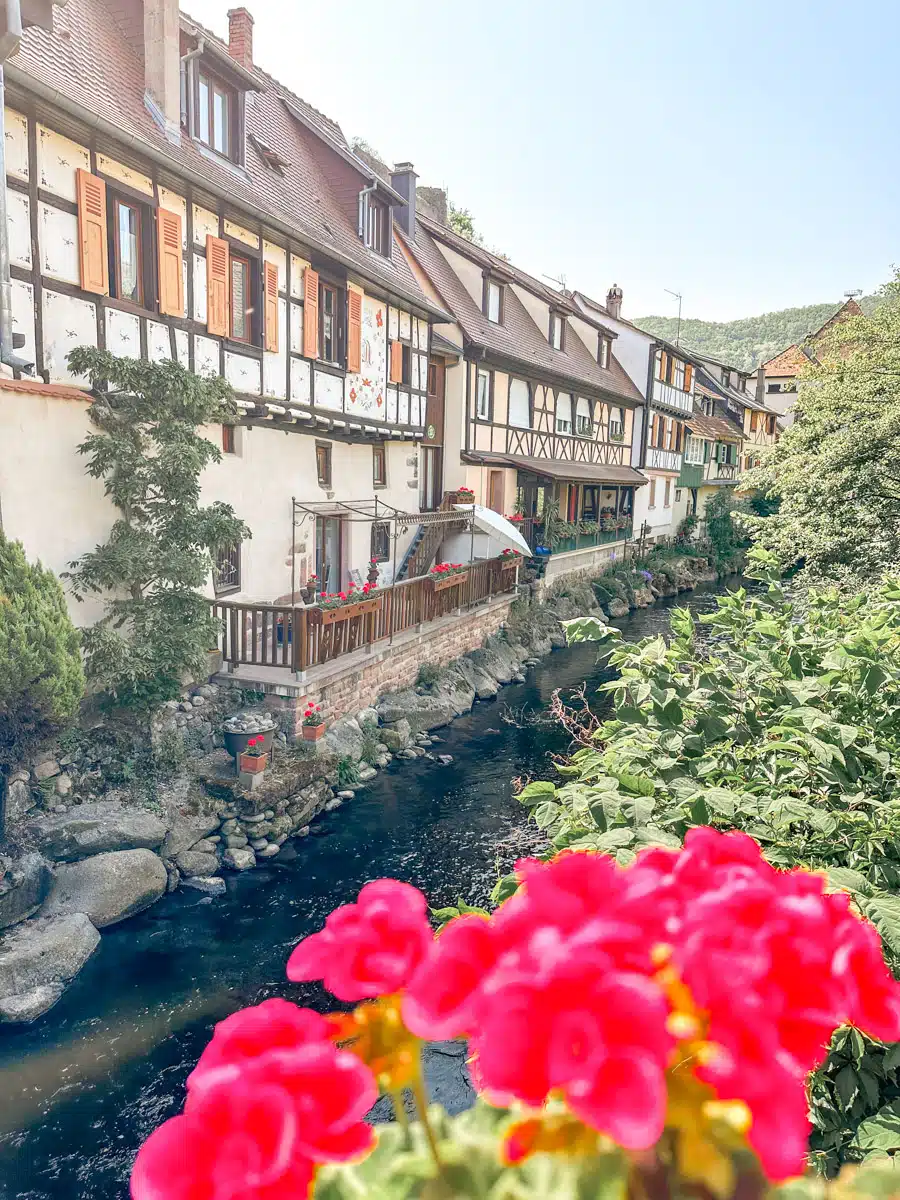
Kaysersberg is another charming and picturesque town in Alsace. You can find it along the eastern slopes of the Vosges Mountains.
Kaysersberg is located in the valley of the Weiss River.
Kaysersberg has a rich history dating back to the 13th century. The village was founded by the Holy Roman Emperor Frederick II. The town’s name means “Emperor’s Mountain.”
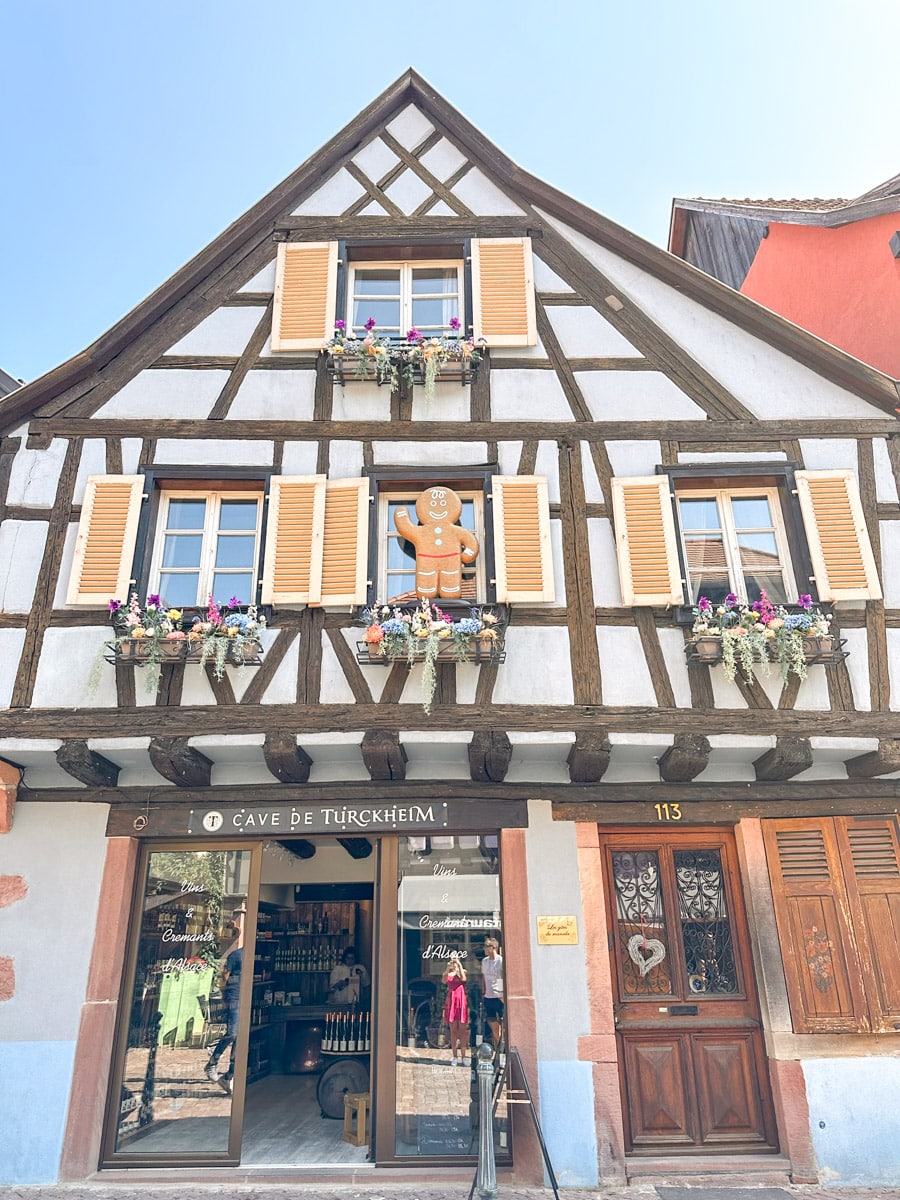
The heart of Kaysersberg is a lovely old town that you can check out on foot. On the central square, you can find local markets and events.
One of the town’s most impressive landmarks is the ruins of Kaysersberg Castle. They are perched on a hill overlooking the town.
The castle is mostly in ruins and not super spectacular. However, it offers breathtaking views of the vineyards and mountains. It is definitely worth the hike.
Obernai
Since this is the last day of the Alsace itinerary, the Alsace road trip will take us back to Strasbourg. On the way, we decided to stop in Obernai.
Obernai’s history goes back to Roman times. The town has been influenced by the Germans and the French due to its good location along important trade routes.
The heart of Obernai is the Place du Marché (Market Square). It is a lively and picturesque square surrounded by historic buildings, restaurants, and cafes. This is a great spot for a late lunch or early dinner.
One of the town’s most interesting landmarks is the St. Odile Church. It is a stunning Gothic church in the middle of the town.
The Mont Sainte-Odile is a nearby mountain. It is famous as a pilgrimage site and a great spot for hiking enthusiasts.


Parking on the Alsace Road Trip
By now, you are probably wondering about the parking situation on this road trip through Alsace.
In this Alsace itinerary, you will be visiting many smaller villages. Much to my surprise, they have big, well-organized parking spots.
They are usually a bit outside the city center, so there is a bit of walking involved.
Parking costs around 1 – 3 € per hour.
Make sure to book a hotel with parking spots for overnight, otherwise, it might get expensive.
How Much Time Do You Need in Alsace for a Road Trip
I think you should spend at least 4 days in Alsace on a road trip.
This 4-day Alsace itinerary leaves some room for relaxation and time to appreciate the villages.
Of course, the more time you have, the better. There is much more in Alsace to be seen and done than what I could fit into this itinerary.
If you want a truly relaxed Alsace itinerary, I suggest staying for a week. This also leaves some more time for wine tasting, hiking in the National Park, and relaxing.
The Alsatian wine route is a place to relax, enjoy, and unwind. Make sure to allow ample time for your visit.

Conclusion: Road Trip in Alsace Itinerary
This brings me to the end of my Alsace road trip itinerary.
I hope you enjoyed discovering colorful half-timbered houses and sweet decorations in cute villages.
Alsace looks like it is right out of a fairytale, with villages like Eguisheim and Ribeauville. You’ll also see beautiful Strasbourg along the Rhine River, full of charm and beautiful things to do.
If you have the option, I would either do this road trip in December for the Christmas markets, or in spring for lovely temperatures. Harvest season, starting in September, is also a great time to go.
I hope you enjoyed this itinerary and have a fun time on your Alsace vacation.
Looking for more France content? Check out:
- Champagne Itinerary
- Is Paris Worth Visiting?
- Alsace Itinerary
- Is Alsace Worth Visiting?
- Best Time to Visit Alsace?
- Best Time to Visit Champagne?
- Champagne Tours from Paris
- One Day in Cannes
- Cannes Cruise Port
- Is Cannes Worth Visiting? An Honest Review
- One Day in Marseille From Cruise Ship: Ultimate Itinerary
- One Day in Corsica Itinerary: From Ajaccio Cruise Port
- One Day in Paris Itinerary: Instagrammable & Chic

About the Author
Justin is a military pilot and travel blogger.
Justin enjoys discovering the world together with his wife and venturing out with his drone to take magical shots.

