
Are you looking for the most amazing hiking trails in the White Sands National Park in New Mexico? Then you are in the right spot.
The White Sands are my favorite place in the US, and luckily they are located basically in my backyard. This magnificent park is home to some of the most beautiful white sand dunes on Earth — it is unlike anything you’ve ever seen.
Every corner of this stunning desert has stunning views and interesting history to offer – and it is a paradise for photographers
My husband and I visited the White Sands National Park many times and explored the trails with rangers and also by ourselves.
To save you a lot of time preparing for your adventure in the white desert, I have created this comprehensive White Sands hiking guide featuring all the trails and everything else you need to know.
Let’s get to it!
White Sands Hiking Trails – Overview
If you are only looking for a quick overview of the White Sands Hiking Trails, you can find it here.
Further down in this post, I will go into bigger detail about the different Walking and Hiking Trails in the White Sands.
The White Sands National Park currently has five different established hiking trails:
- Alkali Flat Trail: This is the longest and most challenging trail in the park
- Backcountry Camping Trail: for visitors who are camping overnight in the park
- Interdune Boardwalk: easy, half-mile boardwalk trail
- Playa Trail: This is a one-mile round-trip hike that leads to a small playa
- Dune Life Nature Trail: self-guided, one-mile loop trail
All of these trails offer unique experiences and opportunities to explore the beauty of White Sands National Park.
I have personally visited all of these trails, and they are each awesome in their own way.

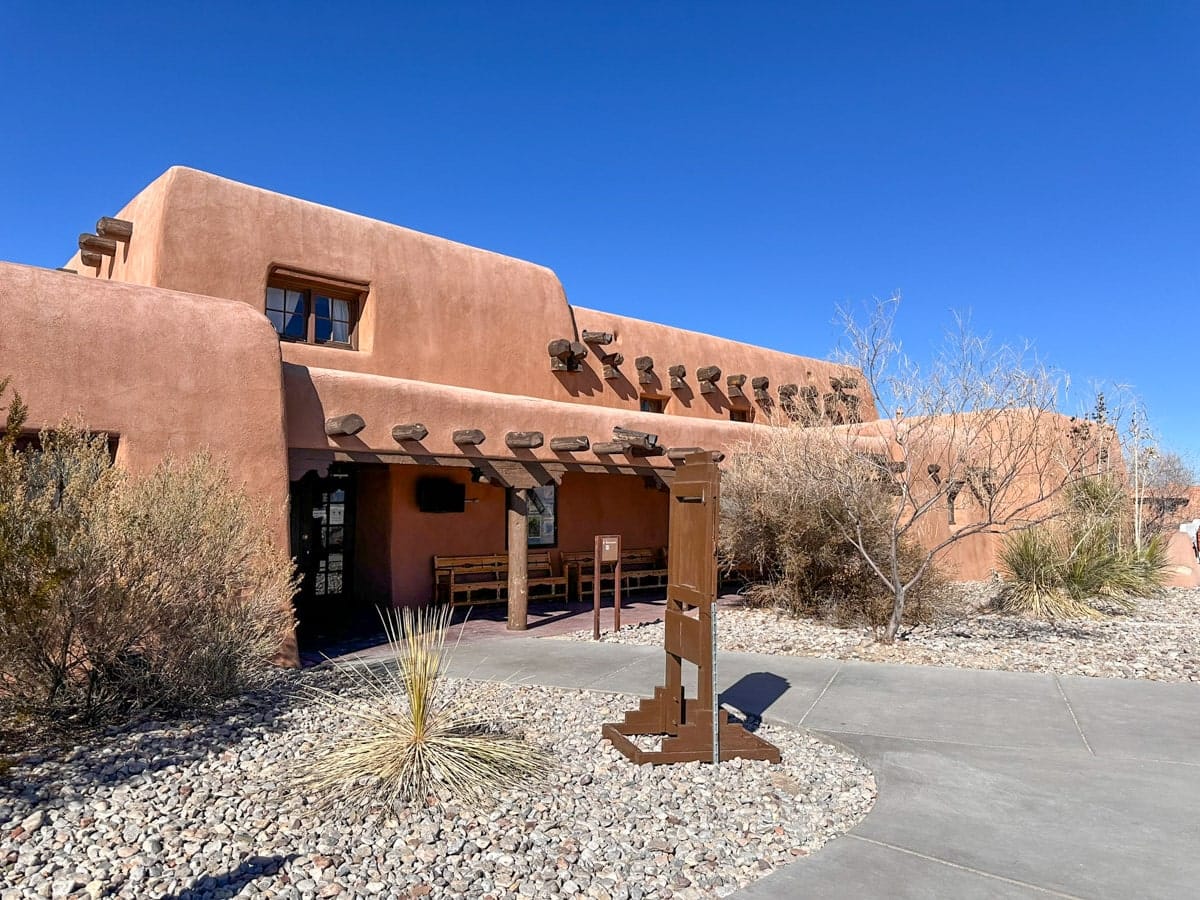
The Visitors Center
There is a visitor center located near the entrance of the park. The visitor center is a great place to start your visit to White Sands National Park.
It offers loads of information about the park’s history, geology, and ecology. Everything is explained in a very accessible way – even for children.
At the visitor center, you can watch a short film about the park, and browse exhibits that showcase the unique history of the dunes.
You can also speak with rangers who can answer questions and provide guidance for your visit. This is a great place to purchase park souvenirs, including books and maps.
I suggest buying some of the essentials here before hiking the park, like sunscreen, water, and a sled.
1. The Alkali Flat Trail
Length: 4.7-5 miles (7.6 km)
Time: 2 – 3 hours
Difficulty: Moderate – Hard
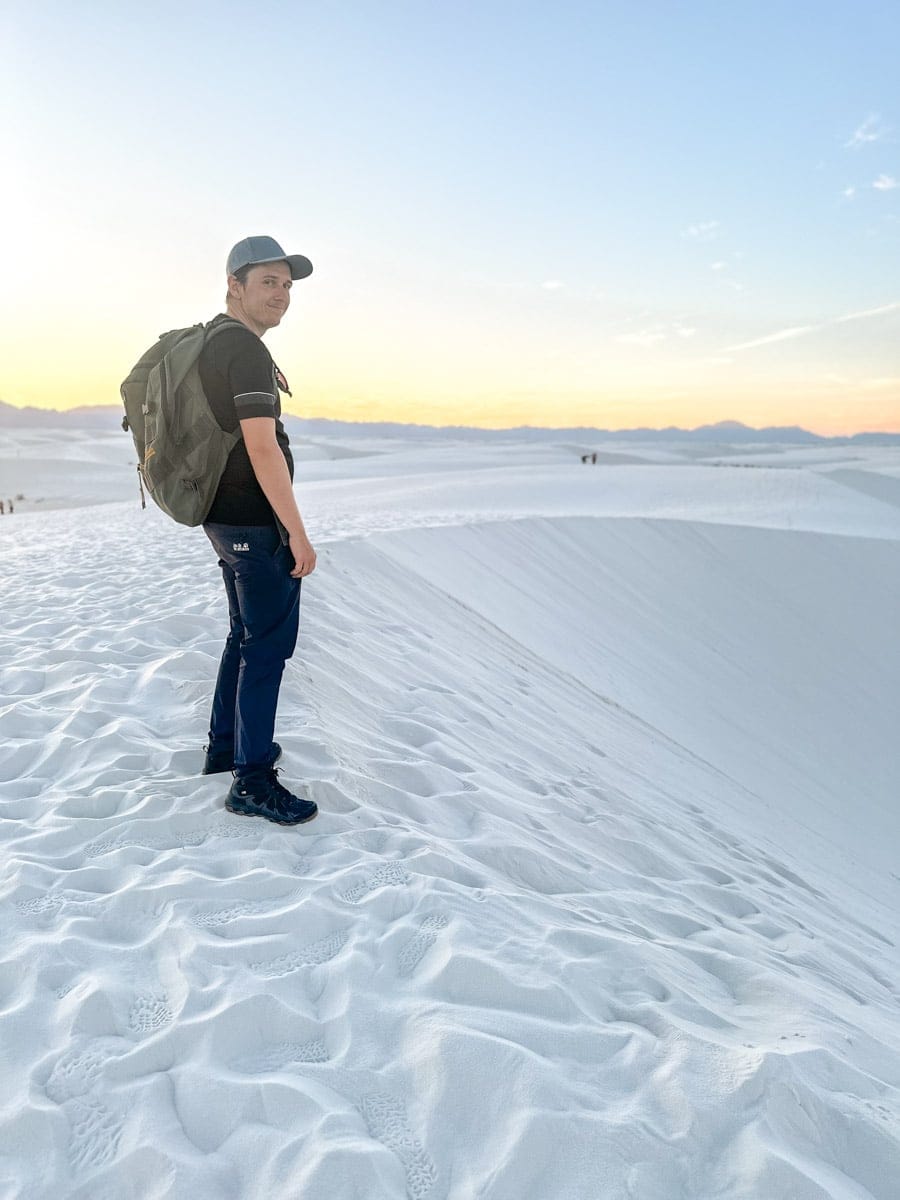
The Alkali Flat Trail is the longest and most challenging hiking trail in White Sands National Park. It is a 5-mile round-trip hike.
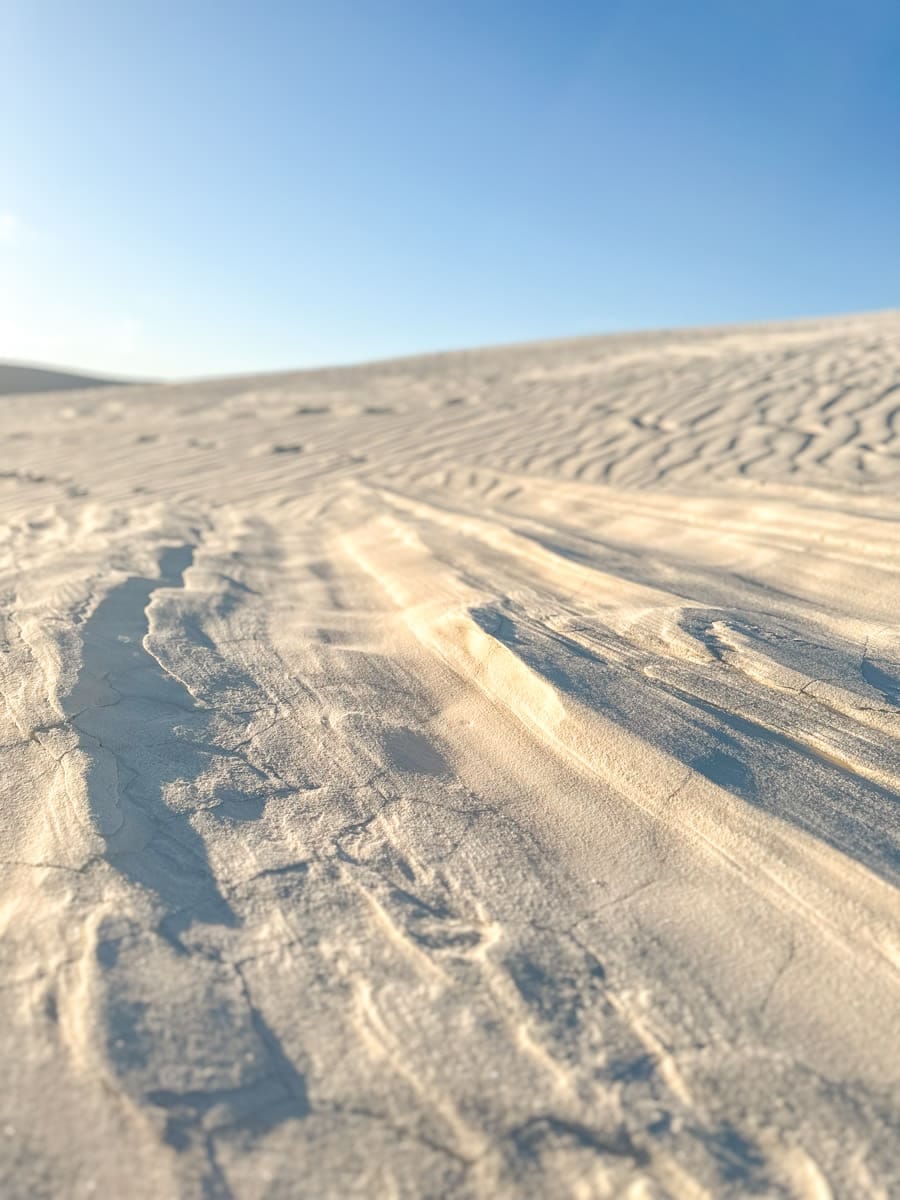
The hike will take you across the dune fields to the so-called Alkali Flat. The Alkali flat is a dry lake bed and is a remnant of an ancient sea.
The trailhead for the Alkali Flat Trail is located at the end of Dunes Drive. The Dunes Drive is a paved road that leads through the heart of the dune field.
The trail begins at the end of the road and heads out into the open dunes. The trail is nicely guided by trail markers so you really can’t get lost. Keep following the red trail markers with a diamond symbol.
The first half of the trail is relatively easy, but it does include a small uphill climb. From there, you will have stunning views of the dune field and the surrounding mountains.
As you come closer to the Alkali Flat, the terrain becomes more challenging. There is a lot of deep sand and some steep dunes that you will have to hike through. On a hot day, this can be a very challenging hike.
Be aware that the Alkali Flat Trail is considered strenuous and can take several hours (we needed about 3 hours) to complete.
Bring plenty of water, sunscreen, and good hiking shoes. I also suggest good sunglasses to keep the wind from blowing sand in your eyes.
There is no shade, no water, and no toilet facility along this trail.
Sabrina’s Tip: Check out this trail for sunset, it has the best views!
2. The Dune Life Nature Trail
Length: 1 mile (1.6 km)
Time: 1 hour
Difficulty: Easy to Moderate
The Dune Life Nature Trail is a one-mile self-guided loop trail and is an excellent choice for families and hikers who want to learn about nature or are simply seeking a shorter hike. This was the first trail I completed, and I liked it a lot.
You can see lots of unique plants and animals that inhabit the dunes in White Sands National Park on this trail. The trail is relatively flat and easy to navigate. There are two steep dunes with loose sand that you will need to conquer on this hike.
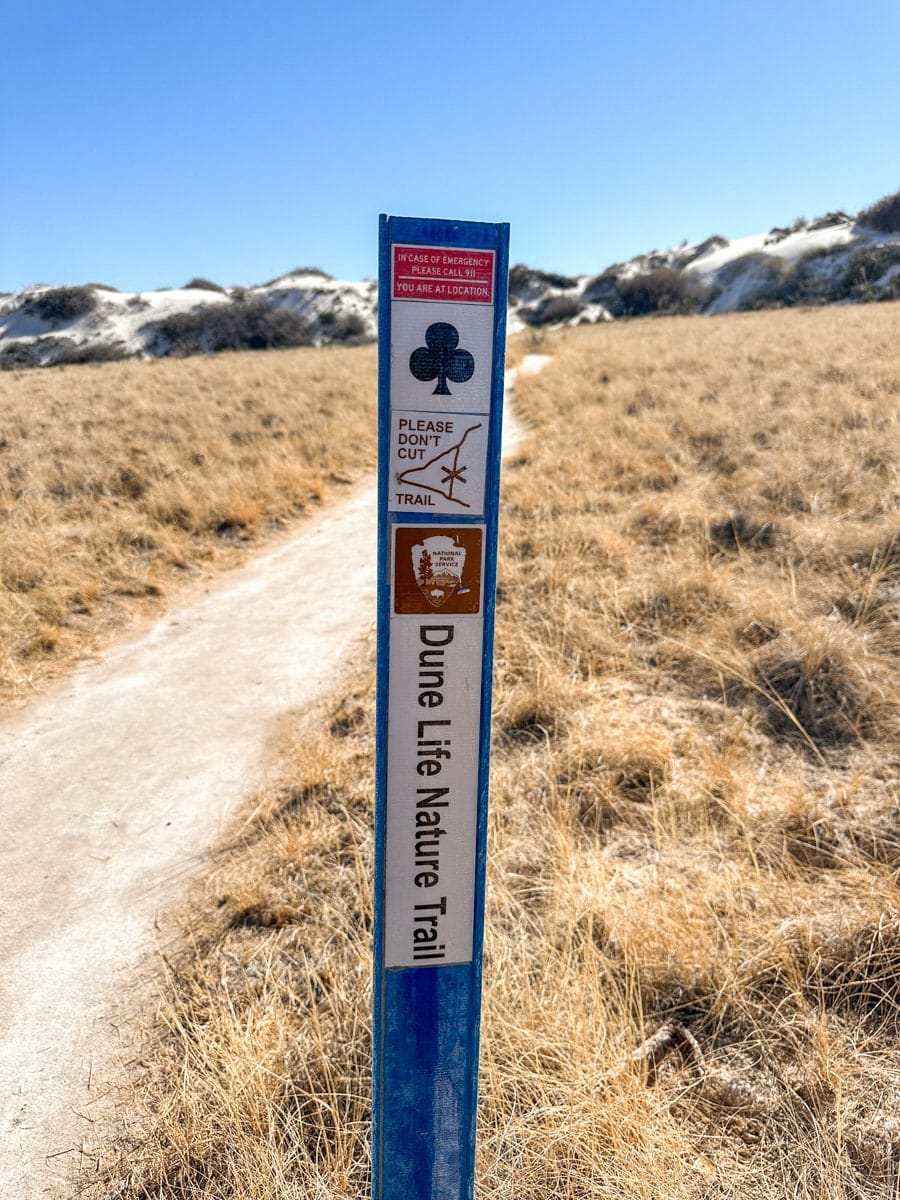
The trailhead for the Dune Life Nature Trail is located near the entrance of the park. It is right next to the picnic area. The trail is marked with informative signs about the different ecological zones in the park. They teach you about the interdune areas, the dune crest, and the slipface.
Some of the plants that we saw on the trail were yucca, soapweed, and various types of cacti. You may also spot animals such as lizards, jackrabbits, and snakes. There are also lots of birds in the park. Maybe you’ll even meet Katy the Kit Fox.
One of the highlights of the Dune Life Nature Trail is the opportunity to see the tracks of animals that have crossed the dunes. You will learn how to identify different types of tracks and match them to the animals.
Overall, the Dune Life Nature Trail is a great way to learn more about the White Sands National Park and get an up-close view of the plants and animals that live in the dunes.
3. The Interdune Boardwalk
Length: 0.5 miles (0.6 km)
Time: 20 mins
Difficulty: Easy
The Interdune Boardwalk is a half-mile-long White Sands Hike. It is a wheelchair-accessible and stroller-friendly trail. The boardwalk is a great option for visitors who are looking for an easy, leisurely walk or for those who have limited mobility. I found it to be a nice trail, but not very challenging.
The trailhead for the Interdune Boardwalk is located near the park’s visitor center. There are lots of interesting signs that give information about the plants and animals that inhabit the interdune areas along the way.
The boardwalk is a bit elevated to protect the delicate ecosystem below. As an added bonus, it will provide you with a unique vantage point for your hike. A shade structure with some seating is located midway along the boardwalk. This is a great place to take a rest.
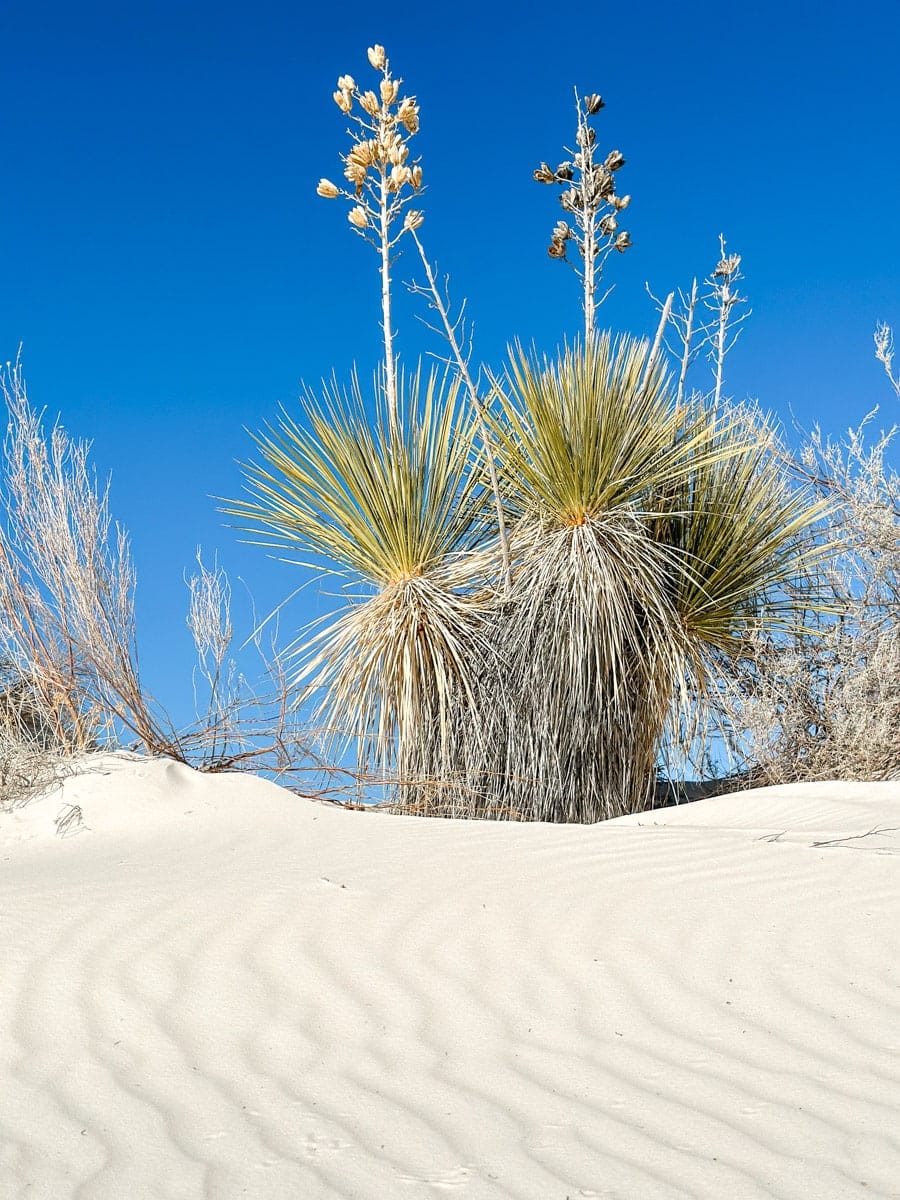
As you walk the boardwalk, you can see a variety of plants, including Soaptree Yucca, Desert Holly, and Apache Plume.
In addition to the plant life, the Interdune Boardwalk also houses lizards, birds, and insects that rely on the interdune areas for food and shelter.
This hike is nice if you just want to get a glimpse of the park without too much effort.
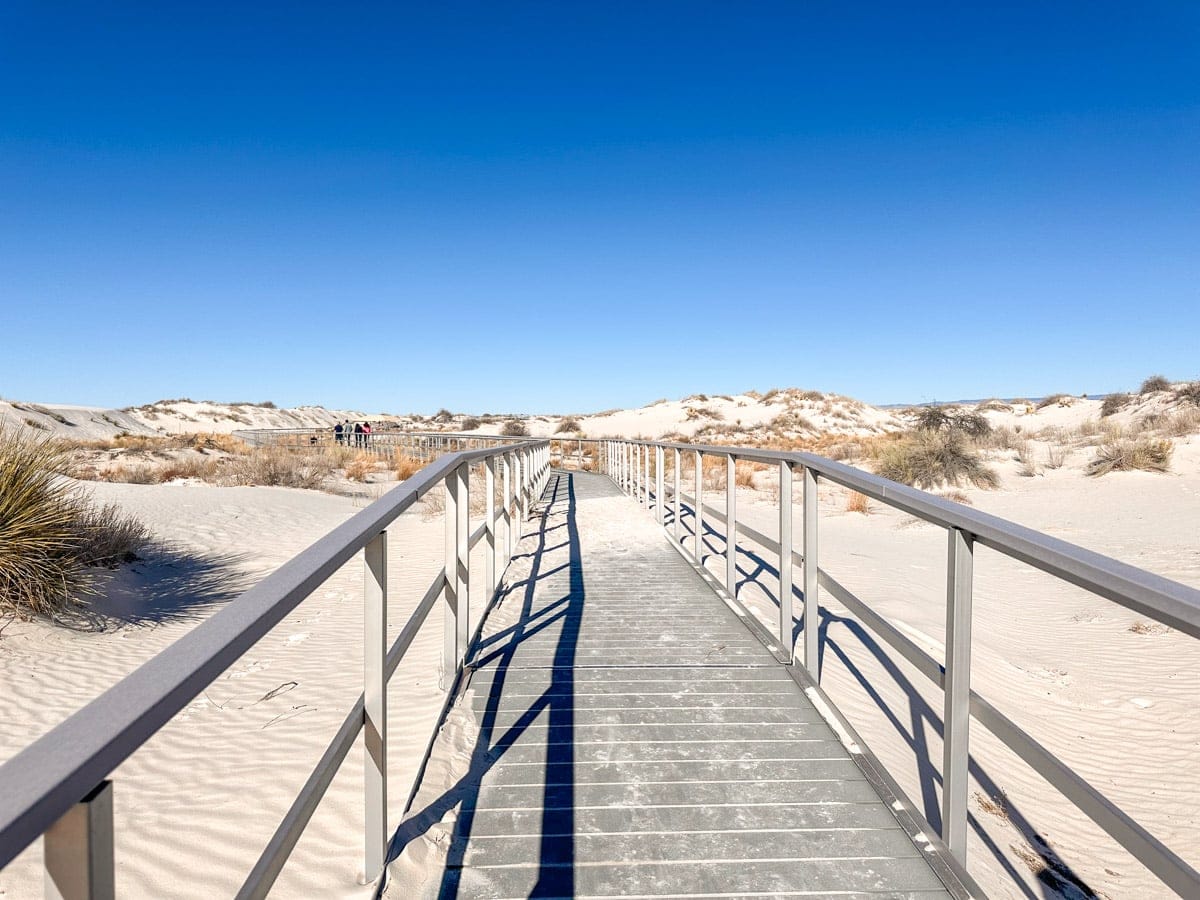
4. The Playa Trail
Length: 0.5 miles (0.6 km)
Time: 30 mins
Difficulty: Easy
The Playa Trail is a beautiful hiking trail in White Sands Park that is approximately 0.5 miles long. It is designed as a loop trail that will take you through the heart of the park.
I would rate the trail as very easy to complete. There are some outdoor exhibits on the way that will teach you a lot about the area. This trail is very family-friendly.
Look out for green markers with a heart symbol on it. They will guide you throughout the trail.
The hike is self-guided, and it will teach you a lot about the importance of playas. A playa is defined as a shallow hole that fills temporarily with rainwater from storms.
The trail will lead you to a small playa that might be filled with water. It might also be dry.
At the end of the walk, you can see what the playa used to look like many years ago. I found this super interesting.
Please make sure to stay on the walkways, the surrounding soil is very sensitive.

5. Backcountry Camping Trail
Length: 2 miles (3.5 km)
Time: 1,5 hours
Difficulty: moderate
The Backcountry Camping Trail is a designated trail that allows visitors to camp overnight in the park’s backcountry. This has quickly become my favorite trail for an after-work hike.
The Backcountry Camping Trail is a 2-mile trail that starts at the Backcountry Parking Lot. It heads directly into the heart of the park. The trail is marked with cairns, and you are required to follow the designated path to protect the fragile desert ecosystem.
Follow the orange trail markers with the spade symbol for this trail.
The trail leads to designated camping sites. They are marked with posts so you can easily find them. There are a limited number of campsites available, and visitors are required to obtain a backcountry camping permit from the visitor center before camping overnight.
Camping in the backcountry of White Sands National Park offers a unique and unforgettable experience. You may have the opportunity to see the park’s wildlife, including coyotes, kit foxes, and kangaroo rats. It also gives you more time to enjoy the park’s breathtaking scenery in a secluded and peaceful setting.
It’s important to note that backcountry camping in White Sands National Park can be challenging, and you should come prepared with the proper gear, including a tent, sleeping bag, and sufficient food and water.
There are no facilities in the backcountry, and you are responsible for cleaning up after yourself.

Guided Sunset Walk With a Ranger
Length: depends per group
Time: 1,5 – 2 hours
Difficulty: easy
The guided sunset walks in White Sands National Park are a popular activity for visitors. This was my favorite thing to do in the White Sands National Park during my visits.
During the guided sunset walks, you can join a ranger-led tour that takes them on a leisurely hike through the park’s dunes as the sun begins to set. The white dunes slowly get a blue tint as the sun sets behind the mountains. The experience is breathtaking.
The ranger shares information about the park’s unique geology, plant, and animal life, and cultural history, and answers any questions visitors may have. Our ranger was a lovely woman who had a lot of knowledge and was happy to share everything she knew.
The sunset walks are approximately one mile in length and last about 1.5 to 2 hours, depending on the pace of the group. The walks are designed to be suitable for all ages and fitness levels. We were a big group, but it was very doable for everyone.
Make sure to wear comfortable shoes, bring water, and dress in layers as the temperature can drop rapidly as the sun sets.
One of the highlights of the guided sunset walks is the opportunity to witness the park’s dunes glowing in the golden light of the setting sun, creating a breathtaking and unforgettable sight.
You can also take advantage of this opportunity to capture stunning photos of the dunes and the sunset. We had the luck of some nice people in our group who took many nice pictures of us.
The guided sunset walks are offered during the park’s peak season, typically from October to April, and reservations are required as space is limited.
If you are in town overnight, make sure to participate in one of these walks – you will love it!


Conclusion: White Sands National Park Hiking
All in all, hiking in White Sands National Park can be a great way to explore the beauty of nature. The five hikes described above offer different experiences and something for everyone who visits.
In order to enjoy your experience at the park and stay safe, remember to pack the suggested items before embarking on your adventure. I hope your experience is just as much fun as mine was!
Both the Alkali Flat and the Backcountry Camping Trail are ideal for hikers with more experience, while the Dune Life Nature Trail and the Playa Trail, as well as the Interdune Boardwalk, are amazing for beginners and families.
Whichever hike you choose in the White Sands, I am sure you’ll love it as much as I did!

About the Author
Hi friend, I am Sabrina, a passionate travel blogger and photographer from Austria.
I love capturing the world through the lens of the seasons, chasing soft spring blooms, golden autumn light, and cozy winter moments along the way. My goal is to help you discover destinations at their most magical moments.